COACHING KEY VOLUNTEERS TO BUILD MOVEMENTS
Workshop #1: The Coach’s Role in Developing Key Volunteers
God Uses Multiple Sources of Input for Development
The Perspective of a Catalytic Coach
The Catalytic coach recognizes that they are one part of the work God is doing in the life of a Key Volunteer. God is using other people and other sources of input to help volunteers grow. Understanding your role in this gives you Kingdom Perspective. With Kingdom Perspective we understand that God is responsible for building His kingdom, and though He delights to involve us, the growth of His Kingdom isn’t dependent on us.
A ‘Kingdom Perspective’ mindset is essential for a Catalytic coach.
The Catalytic coach also understands that the Holy Spirit is the One responsible for leading, speaking truth to and growing Key Volunteers and movements. Understanding this shapes how we view our role as coaches and ultimately our view of what we are responsible for and gives us the freedom to trust the Holy Spirit for the work He is doing in someone else’s life.
In the Catalytic approach, often our role as coach is to help students find what they need to grow and mature spiritually. We want to help them be connected to multiple, useful sources of input and discipleship as we coach them to take personal responsibility together with the Lord for their growth.
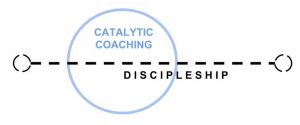
The role of the “discipler,” as we have traditionally thought about it in CCC, is important, but it is actually just one function among many in helping others to grow.
The coach’s role is to be a part of the equation in the development and growth of new leaders, but not central to it.
There are aspects of discipleship involved in coaching, but recognize that you aren’t necessarily always the primary discipler. Understanding that our role isn’t all inclusive frees us up to coach multiple leaders at the same time.
Because of the breadth of our scope in Catalytic, we have to think and look beyond ourselves and our limited resources to finding others who God is putting in place, who will fill the gap in order to facilitate training and growth across the distance.
We desire to develop student movement leaders through our coaching. One way to do this is by learning to ask good questions that empower and release the KV.